Phin Coffee Grind Size: Find the Sweet Spot
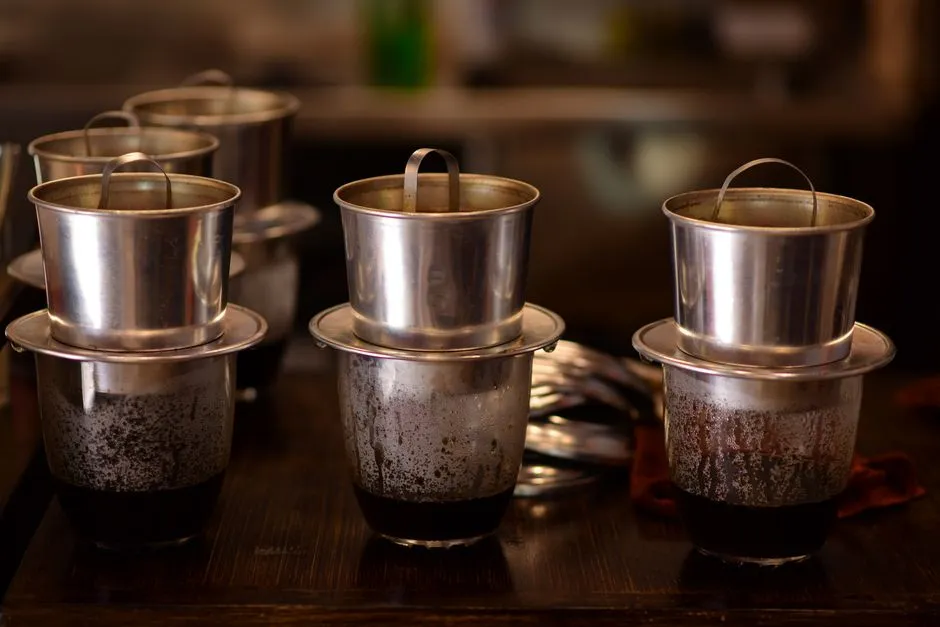
Start medium-fine and let flow answer
Phin coffee usually starts with a medium-fine grind: finer than many standard pour-overs, but not powdery like some espresso preparations. The correct setting is the one that creates an even drip and a balanced cup in your specific filter. Grinder labels are not standardized, so one model's numbered setting does not transfer reliably to another.
Use texture only as a rough visual cue. Consistency of particle size matters alongside average fineness.
Read the brew as a grind test
Keep coffee dose, water, temperature, press position, and filter unchanged. Grind one batch at a chosen setting and follow the same phin brewing method.
If water races through and the cup tastes thin, sharp, or hollow, grind a little finer. If drops stall and the cup tastes harsh, dry, or muddy, grind a little coarser on the next brew. A stalled phin still holds near-boiling water: do not lift, press, or stir it. Leave it stable until cool before emptying it.
Flow alone cannot diagnose everything. A blocked filter, tilted bed, heavy press, or too much coffee can also slow the brew. The slow-phin guide separates those causes.
Make one click-sized change
Move the grinder in small increments. Large jumps can skip the useful range entirely. Purge or account for retained grounds according to the grinder's instructions so the next dose reflects the new setting.
Record setting, coffee, dose, water, visible flow, and taste. If a change improves sweetness and clarity but leaves the cup slightly weak, adjust ratio afterward—not during the same test.
Manage fines without becoming obsessed
Coffee grinders produce a range of particles. Very fine dust can migrate into phin holes and add resistance; large fragments can create fast pathways. A capable burr grinder generally gives more even results than random chopping, but no grinder produces identical particles.
Level the bed gently and keep the press placement consistent. Do not tamp hard to compensate for a coarse grind. Compression adds a second uncontrolled variable and can stall a chamber that is holding near-boiling water.
Adjust for coffee and roast
Different beans and roast levels fracture and extract differently. A grind that suits one dark, brittle coffee may not suit a denser lighter roast. Humidity, coffee age, and grinder condition can also shift flow.
When changing coffee, return to a known recipe and expect to redial. Do not treat the old mark on the grinder as a binding agreement with the new bag.
Diagnose fast flow separately
If the brew remains fast after a modest finer adjustment, check whether the dose is too low for the chamber, the bed is uneven, or the filter holes and press create minimal resistance. Our fast-drip guide provides a controlled sequence.
The goal is not the slowest possible phin. It is an even extraction that tastes good after stirring the completed cup. Run each test on a stable heat-safe cup, pour slowly, and treat the metal chamber and press as hot until they have cooled. Once you find it, write the setting beside the coffee name and recipe instead of relying on memory.
Brewing guidance is educational; ingredient labels, allergies, caffeine sensitivity, and food-safety needs vary. Use pasteurized eggs for uncooked egg drinks and consult an appropriate health professional about individual dietary concerns.