How to Brew Coffee With a Phin Filter
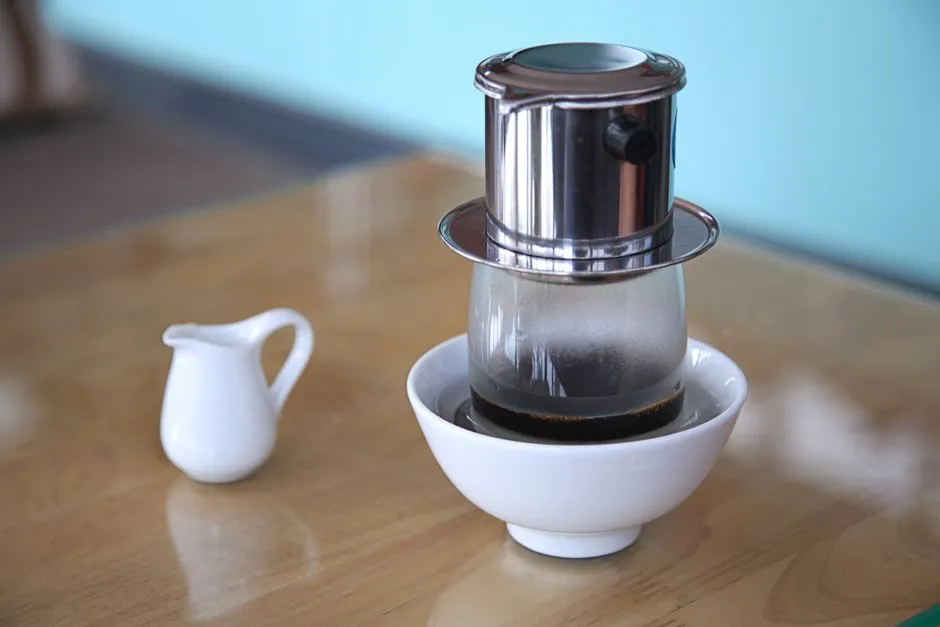
Start with a measured phin recipe
To brew with a phin, place medium-fine coffee in the chamber, level it, set the press gently, add a small amount of hot water to wet the grounds, then fill with the remaining water and cover. Let gravity do the work. A useful starting point is 18 grams of coffee and 120 grams of water, a ratio of about 1:6.7.
Treat that as a useful baseline. Phin shape, hole pattern, coffee, roast, grinder, water, and desired strength all change the result.
Assemble the filter correctly
A common phin has a saucer or base, brewing chamber, perforated press, and lid. Set the base and chamber securely on a heat-safe cup. Confirm that the cup is wide and stable enough to support the brewer.
Rinse the filter and cup with hot water, then discard that water. Preheating reduces heat loss and checks that the holes are clear. Near-boiling water and the heated metal can cause burns. Keep the cup stable, pour slowly, and lift hot pieces only by a handle or with a dry heat-resistant grip.
Add freshly ground coffee and shake the chamber gently to level the bed. Do not pack it with a spoon. Place a gravity press on top without forcing it, or follow the light-contact method intended for a screw press.
Bloom, fill, and wait
For the 18-gram recipe, add about 20 grams of hot water across the grounds and wait briefly until the bed is evenly wet. Then add the remaining 100 grams, bringing total brew water to 120 grams. Put on the lid.
The brew should begin with drops and develop a steady drip. Once the chamber contains hot water, do not lift it, stir inside it, or press the insert. Those actions can destabilize the brewer and spill near-boiling water. Leave it centered on the cup until dripping finishes or the equipment has cooled.
If water pools indefinitely, read the slow-drip troubleshooting guide. If it rushes through and tastes thin, the grind-size guide is the first stop.
Taste before changing the recipe
Stir the finished coffee because early and late drips can differ in concentration. Taste it black first, even if you plan to add milk or ice. Note strength, bitterness, sourness, dryness, sweetness, and aroma in ordinary words.
If the cup is weak and the flow fast, grind finer or add a little more coffee next time. If it is harsh and the flow very slow, grind coarser or reduce resistance. Change one variable per brew so the result is easy to interpret.
Our phin ratio guide shows how to adjust strength separately from flow. This compact recipe can deliver a concentrated serving. The FDA says caffeine sensitivity varies. If you are pregnant, trying to become pregnant, breastfeeding, or concerned about a medical condition or medication, its caffeine guidance says to talk with your health care provider about whether to limit caffeine.
Serve it your way
Drink the concentrate black, dilute it with hot water, stir it into sweetened condensed milk, or pour it over ice. For iced drinks, brew a concentrate that remains distinct after dilution without deliberately stalling the filter.
Wash the phin once it is cool. Knock out grounds, rinse every perforation, and dry the pieces fully. Coffee oils and fine particles alter flow over time. A clean filter is part of a repeatable recipe.
Brewing guidance is educational; ingredient labels, allergies, caffeine sensitivity, and food-safety needs vary. Use pasteurized eggs for uncooked egg drinks and consult an appropriate health professional about individual dietary concerns.