Phin Coffee Ratio: A Repeatable Starting Recipe
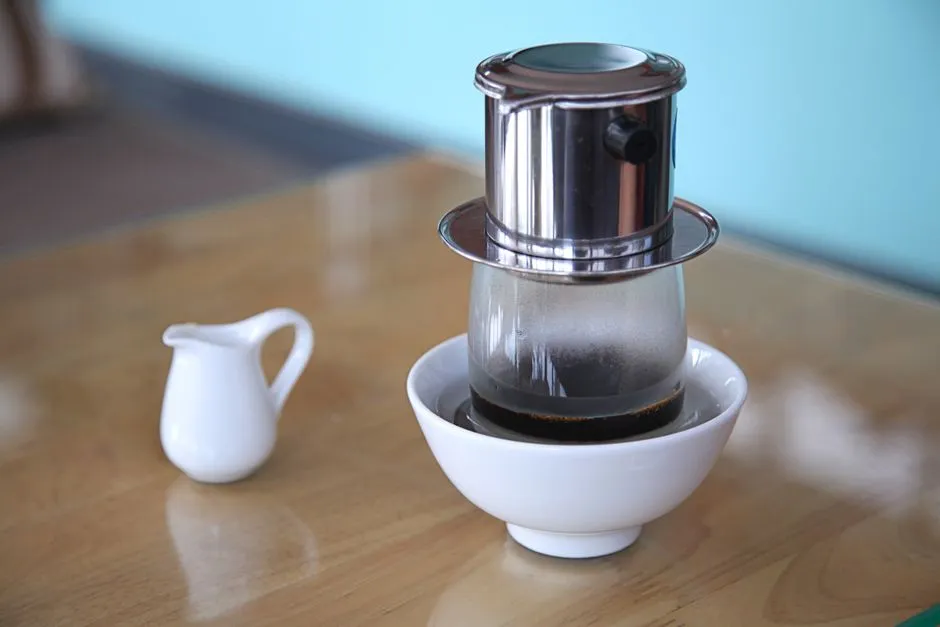
Use 1:6 to 1:8 as a starting range
A practical phin coffee ratio is one part coffee to six to eight parts brew water by mass. For example, 18 grams of coffee with 120 grams of water is 1:6.7 because 120 ÷ 18 equals 6.67. This makes a concentrated cup that can be served black, diluted, mixed with condensed milk, or poured over ice.
It is an editorial starting range, not a claim that every Vietnamese café uses one formula. Filter capacity and drink style matter.
Weigh water instead of trusting the rim
Place the cup and phin on a scale, tare it, add the coffee, then track total brew water. For an 18-to-120 recipe, a 20-gram bloom followed by 100 grams completes the 120-gram total. Do not accidentally add 120 grams after the bloom; that produces 140 grams and a different ratio.
The phin brewing guide shows the full sequence.
If your phin cannot safely hold the planned water in one fill, divide it into controlled pours or choose a filter suited to the recipe. Never balance an overfilled hot chamber above a narrow glass. Once hot water is in the chamber, do not lift, stir, or press the brewer; leave it stable until dripping finishes or the equipment has cooled.
Change strength without confusing flow
Ratio mainly changes concentration, while grind and bed resistance strongly affect flow and extraction. To make a stronger drink, increase coffee modestly or reduce water while keeping enough room and a workable bed. To make it lighter, add brew water or dilute the finished concentrate.
Changing dose also changes bed depth, so it may alter drip rate. If the new recipe flows differently, note that effect and adjust grind only on the next brew. One-variable testing keeps the lesson readable.
Plan for ice and milk
Ice melts and dilutes coffee. Condensed milk adds sweetness, dairy, and body. Brew a concentrate you enjoy before the additions, then measure ice and milk so the final drink can be repeated.
For a first iced cup, keep the 18-to-120 brew, stir it with your chosen measured amount of condensed milk, and pour it slowly over a weighed portion of clean ice in temperature-suitable glassware. Taste after some melting. The Vietnamese iced coffee guide helps balance all three components.
Scale with arithmetic, not guesswork
To preserve a ratio, multiply coffee mass by the water factor. At 1:7, 20 grams of coffee needs 140 grams of water. At the same ratio, 25 grams needs 175 grams. Confirm that the phin has headroom before scaling.
Do not assume doubling the recipe in one chamber produces an identical cup. The deeper bed and longer flow path may require a grind change. Brewing two separate filters can be more predictable.
Keep a ratio ladder
Test 1:6, 1:7, and 1:8 with the same coffee, grind setting, water source, and method. Hold the coffee dose fixed and change only the mass of brew water for each ratio. Stir and taste each at a similar temperature. Pick the concentration that suits the intended drink, then fine-tune grind for balance.
If a cup drains too quickly, use the grind-size guide before making the ratio increasingly extreme. More concentrated coffee does not make caffeine disappear. The FDA says caffeine sensitivity varies. If you are pregnant, trying to become pregnant, breastfeeding, or concerned about a medical condition or medication, its caffeine guidance says to talk with your health care provider about whether to limit caffeine. Choose the ratio from the intended drink, the brewer's capacity, and the taste of the stirred cup.
Brewing guidance is educational; ingredient labels, allergies, caffeine sensitivity, and food-safety needs vary. Use pasteurized eggs for uncooked egg drinks and consult an appropriate health professional about individual dietary concerns.